
Straightforward Garden Help and Advice
This site is a source of online gardening information, inspiration and entertainment for all gardeners from the expert to the reluctant, wherever you may be. For gardeners who want information and advice on choosing and growing plants, laying a patio, or decks, erecting a shed, garden office or summerhouse etc. Without wanting to become a horticulturalist or take a garden design course to get there. We don't do trendy, we do what works and what you want in your garden.
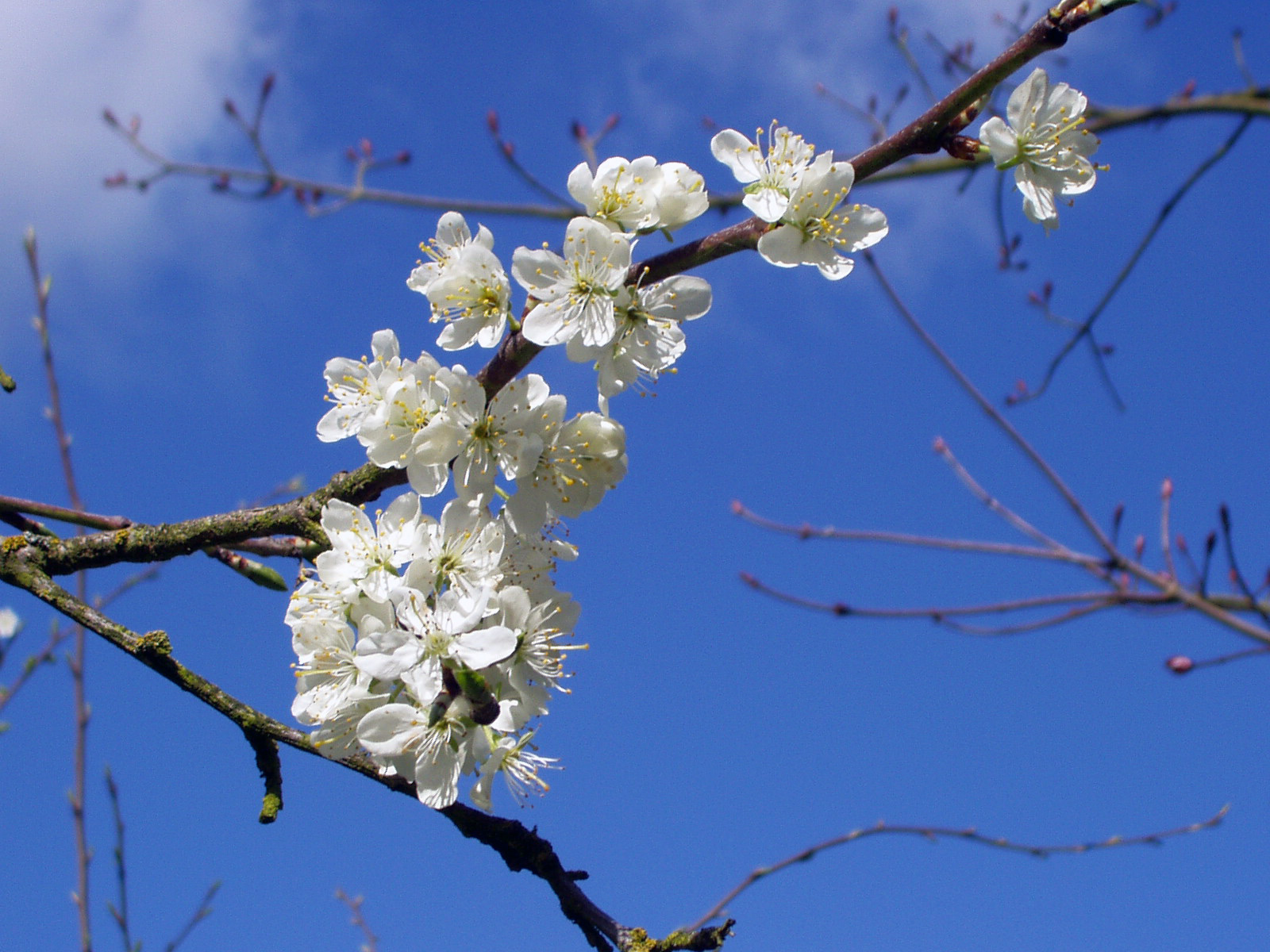
Spring - Plum blossom in my back garden. This is a Victoria Plum and is always one of the earliest trees / shrubs to flower in the spring and looks magical against all the bare twigs at the time. It also worries me in case there's a frost which kills the flowers, it makes the difference between 6 plums or 60lbs of plums - looking good this year. Plum trees to buy

Summer - Morning Glory - Heavenly Blue. One of my favourite flowers and a must-have annual every year. Sow the seed in March and by late May to June, they're ready to go outside. They do great in large containers, make sure you give them plenty of space and you'll have a endless succession of perfect flowers every day as long as you dead-head them in the evening. Ipomoea to buy
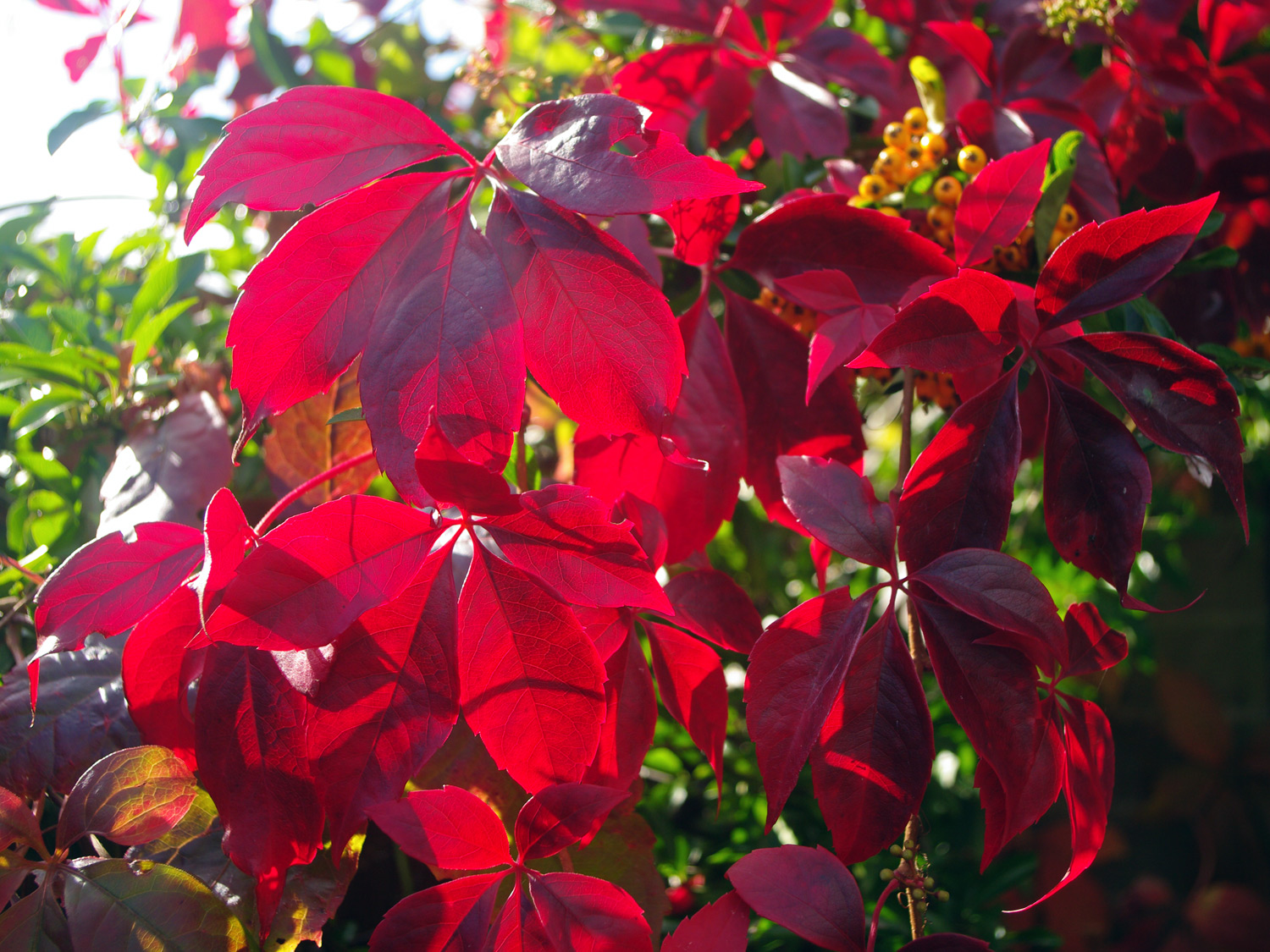
Autumn - Boston Ivy - Parthenocissus tricuspidata. This plant will thrive in sun or shade and is very accommodating in this respect being useful to cover something unsightly, though being deciduous, only for part of the year! The leaves are redder and stay on the plants in this colouring for longer the more sun they get.
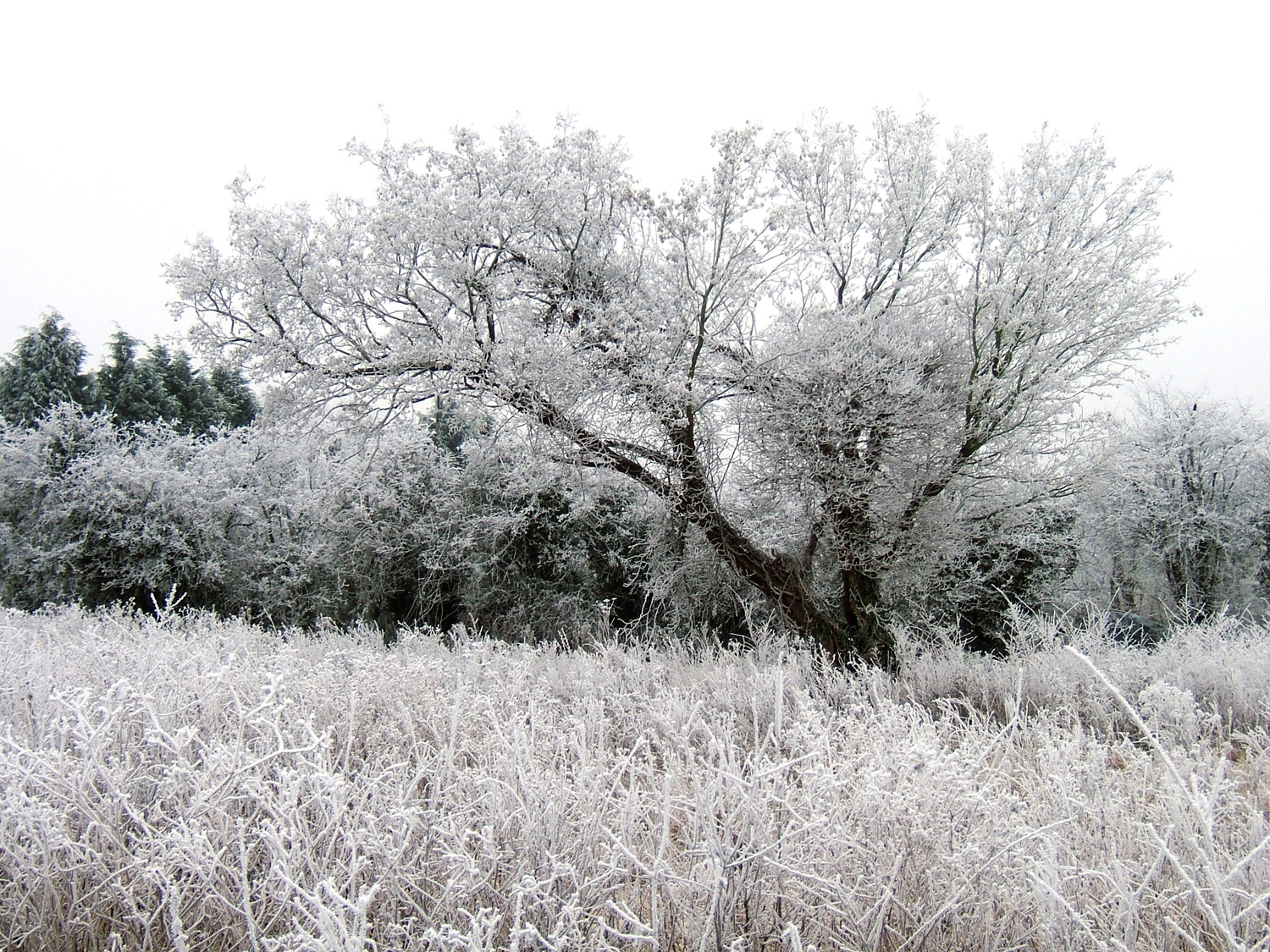
Winter - A world of white. An ethereal world made so by the application of water vapour in the air and a few degrees change in temperature, isn't it great that the world can change so fundamentally so easily?
Plants and Flowers for the Month of:
January | February | March | April | May | June | July | August | September | October | November | December
Latest.... new and updated pages:
Woodburning Stoves | Windproof Barriers, Fences and Hedges | Fruit tree problems and tips: Apple, Pear, Plum | How to Get Rid of and Deter Moles | How to Save a Dying Tree | How to Plant a Rose Tree | Which fruit tree for my garden?
 There's
nothing mystical or magical about having "green fingers". Gardening
like everything else is a mixture of inspiration and perspiration,
and is biased towards the second of these.
There's
nothing mystical or magical about having "green fingers". Gardening
like everything else is a mixture of inspiration and perspiration,
and is biased towards the second of these.
Green-fingeredness is not something you are or aren't born with, and it can certainly be learnt. Like other skills some people will be naturally better than others. If you put in the time and effort and are prepared to learn, then you can develop the verdant digits so envied by those for whom everything botanical seems to perish as soon as their back is turned. Gardening isn't a black art and can be learnt by any-one.
There are three aspects to green-fingeredness;
 Effort
Understanding
Knowledge
Effort
Understanding
Knowledge
Effort - One
rule of thumb I use is "don't use a trowel if you can get a
spade in". People frequently garden on too small a scale,
tickling the soil as it's easier, rather than getting deeper
down into it. The effort can be spread over more than one day
and is probably better that way so you get to look at your plants
more often. Look at it like a free visit to the gym with an
end result other than just a pool of sweat on the floor.
- Frequently inspect your plants so that you know as soon
as possible when they need attention.
- When planting, prepare the soil well, and do it every
time you plant.
- Weed frequently, dig out the roots of perennial weeds,
don't just cut off the top-growth.
- Make borders wide, they look so much better.
- Dead-head frequently for a continuous show of blooms.
Understanding - The
most difficult aspect to learn. It entails looking at life from
the plants point of view, seeing why it is happy or unhappy
in its current position. Thinking about the impact of flowering,
pruning, pests etc. But at least it's easy because you can relax
when you do it.
Plants are living things, and like other living things they have their foibles and preferences. The commonest reasons that plants fail are that they are planted in the wrong place (some-times the wrong continent) and they are not allowed to establish themselves properly. When you first get some new plants treat them like children, appropriate attention early on is worth ten times the remedial work when things have gone wrong due to a lack of care.
Knowledge
- While it is certainly very useful to carry around a
knowledge base of plants, soil conditions, pests etc. in
your head, it's not necessary as long you know where to find
the information AND look for it and use it.
If you can't afford a selection of books then there are plenty of web sites to get the information from, though books do have their conveniences. Another important thing is to apply the knowledge up front, think about what plants you are going to buy before you buy them, and where they are going to go before you plant them.
Gardening Quotes:
Gardening takes a plot of land, a hoe and willing
muscles. Scratching the soil, harvesting garden fruits,
are peaceful results. With a garden, there is hope.
Grace Firth
The greatest gift of the
garden is the restoration of the five senses.
Hanna Rion
Gardening is a way of showing
that you believe in tomorrow.
Author Unknown
Garden: One of a vast number of free outdoor restaurants
operated by charity-minded amateurs in an effort to
provide healthful, balanced meals for insects, birds
and animals.
Henry Beard and Roy McKie, Gardener's
Dictionary
Gardening is ultimately a folly
whose goal is to provide delight.
Deborah Needleman
Season of mists and mellow fruitfulness, Close bosom-friend
of the maturing sun; Conspiring with him how to load
and bless with fruit the vines that round the thatch-eaves
run.
From John Keats
Gardening is
a labour full of tranquility and satisfaction; natural
and instructive, and as such contributes to the most
serious contemplation, experience, health and longevity.
John Evelyn, 1666
Just living is not
enough ...
One must have sunshine, freedom, and a
little flower.
Hans Christian Anderson
Gardening is the art that uses flowers and plants
as paint, and the soil and sky as canvas.
Elizabeth
Murray
The most noteworthy thing about gardeners
is that they are always optimistic, always enterprising,
and never satisfied. They always look forward
to doing something better than they have ever done before.
Vita Sackville-West
Gardening is medicine
that does not need a prescription ... And with no limit
on dosage.
Author unknown
A garden
really lives only insofar as it is an expression of
faith, the embodiment of a hope and a song of praise.
Russell Page, The Education of a Gardener, 1962
I don't think we'll ever know all there is to know
about gardening, and I'm just as glad there will always
be some magic about it!
Barbara Damrosch
I also know that we should cultivate our gardens.
Voltaire, Candide
Gardening is an exercise
in optimism. Sometimes, it is a triumph of hope over
experience. A garden is a delight to the eye and a solace
for the soul.
Sadi
Half the interest
of a garden is the constant exercise of the imagination.
Alice Morse Earle, 1897
 Custom Site Search
Copyright 2000 - present. All Rights Reserved | Privacy Policy Statement